

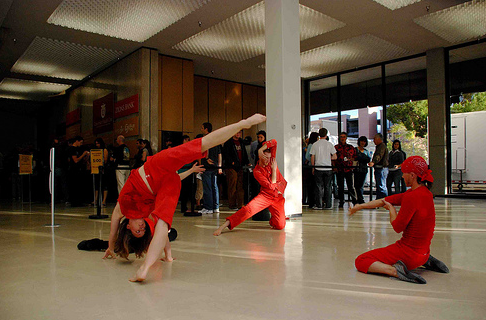
Sofia Gorder: The Art & Science of Mindful Breathing and Movement for Well-Being | ARTrageous Online
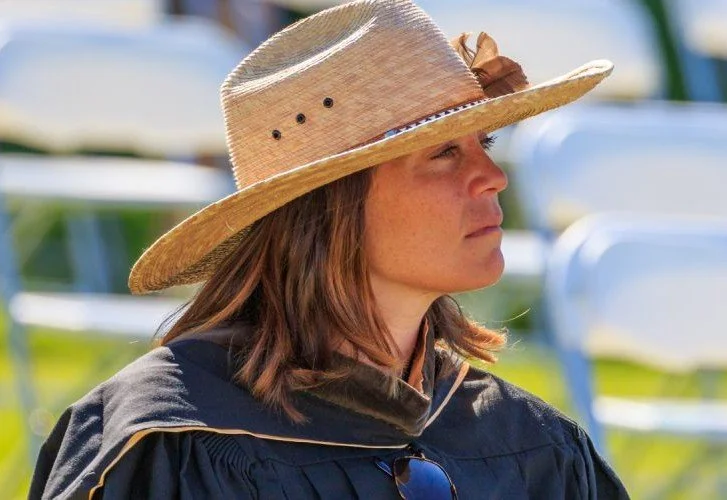
Sofia grew up in the mountains of Salt Lake City on the side of a cliff! Perhaps where she got her edginess?? She started dancing at 10 years old, ballet, modern dance and then she escaped to New York to become a beat girl and breakdance. She went on to formalize her passion with a BFA in Modern Dance at the University of Utah and an MA in Dance Education from California State University, Long Beach, where she focused on kinesiology and anatomy.
Her academic work delved into how immersive experiences like dance can stimulate neurochemical releases—dopamine, serotonin, and endorphins—that enhance learning, memory, motivation, and emotional connection. She also explored how the autonomic nervous system responds to breath and movement, offering scientific insight into the deep sense of self and place she had always experienced through dance.
Sofia describes dance as essential to her well-being—mental, emotional, and physical. When she dances, she feels strongest, most connected, and most alive. Driven to share that discovery with others, Sofia founded the nonprofit Feral State, with a mission to guide individuals back to their most primal, untamed, and authentic selves. What does that mean in practice? Working in schools, colleges, and communities, she designs immersive experiences that blend breathwork, movement, and mental health practices to help people release tension and reconnect—with their bodies, hearts, and minds.
Topics: Neuroscience, breathwork, healing, movement, cross-cultural exploration
Class: Science, English, Fine Arts, Library Media
Grades: 7-12 | Time: 4 Hours
Platform: In-Classroom or Online Learning Management System (LMS) with synchronous learning option (e.g., Zoom, Google Classroom)
Part I | Meet Sofia Gorder
Part II | The Science of Immersive Experiences and Breathing Ourselves Back to Health
Part III | We Got You: Tools for Sleep, Stress, Slouching, and Showing Up!
Inside the Unit
In this learning module, Sofia introduces us to the powerful intersection of art and public health, exploring the healing potential of movement and breath.
In the first video, you’ll meet Sofia and hear her story.
In the second video, Sofia dives into science and history—explaining how modern life has pulled us away from the balance our prehistoric ancestors enjoyed. The results? A growing list of chronic conditions and symptoms: anxiety, depression, brain fog, dissociation, chronic pain, poor posture, headaches, digestive issues, and more.
In the third video, Sofia offers evidence-based tools—simple, accessible breath and movement techniques that restore the body’s natural chemical balance and bring us home to ourselves.
Quotes to Use Throughout Curriculum:
“Happy, resilient people build healthy and thriving communities.” Sofia Gorder
“No matter what you eat, how much you exercise, how skinny or young or wise you are, none of it matters if you’re not breathing properly.” James Nestor
"When the breath wanders, the mind is unsteady, but when the breath is calmed, the mind too will be still." — Hatha Yoga Pradipika
What’s included in the course?
-
Supplies for Pre-Viewing and Viewing and Post-Viewing Activities:
Breath, Body and Neuroscience Student Reference Sheet
Supplies for Demonstration Activity
Across Cultures: Accessing Our Internal Pharmacy Through Breath
Multimedia and Presentation Rubric & Checklist
Multimedia Presentation Choice Board
Supplies for Art Integration Activity
Dance Room or Gymnasium where you can also screen a video
Annotation Software (Canvas or other LMS for peer review; Perusall, Google Docs)
-
Launch Activity–Pre-Viewing: Video 2: Runner’s High
[45 min]
[Learning Intention 1]
Procedures:
Hook: Tell Students: Think about a moment of glory in your life, like scoring the winning goal in a sport, or shining in a performance. Do a round robin where students share with the class.
Ask Students: In video 1, what did Sofia call this feeling? Runners High
Tell Students: And that happens when our breath is really metered and well balanced, and we also are recruiting a lot of adrenaline. In this next video we are going to learn more about the science behind how our bodies work and why conscious breath and movement are key to our well-being.
While Viewing: The Science of Immersive Experiences and Breathing Ourselves Back to Health
[20 min]
[Learning Intentions 1,2,3]
Procedures:
Distribute the Breath, Body and Neuroscience Student Reference Sheet.
Tell Students: This reference sheet will help you with the neuroscience quiz you will take after watching the video. Take a minute to read through it. Feel free to take your own notes on the neuroscience Sofia is teaching you.
Play Video 2: The Science of Immersive Experiences and Breathing Ourselves Back to Health (12:32 min)
Post-Viewing: What Did You Learn About Neuroscience?
[20 min]
[Learning Intentions 1,2,3,7]
Procedures:
Tell Students: Let’s practice what we learned by taking a neuroscience quiz, based on what Sofia just taught you in Video 2.
Distribute the Neuroscience Quiz electronically to students (it is on the jotform platform which is free.)
Have students take the quiz and discuss the results.
Demonstration:
[90 min]
[Learning Intention 5, 6]
Procedures:
Tell the students: We are going to begin this section with a guided breathing exercise called Relaxing Breath.
Play video: Relaxing Breath (1:33 min) and have students follow along.
Ask Students: What did you notice in your body, mind, emotions during that breathwork?
Ask Students: Let’s recap: What did we learn from Sofia about conscious breathing and movement?
Possible Answers:
Sometimes our anatomy and physiology are in conflict with our culture. The way our bodies are designed doesn’t always match the fast-paced, screen-heavy lifestyle we live today.
The fat, salt, and sugar we crave because they once gave us necessary fuel, are no longer useful and in overabundance.
Breath and mindful movement can strengthen the immune system, improve emotional stability, lift mood, and help reduce conditions like anxiety and depression.
Slow, deep, steady breathing activates the parasympathetic nervous system — the “rest and digest” state. This slows heart rate, lowers blood pressure, relaxes muscles, and creates a sense of calm and focus.
The vagus nerve is the main pathway of the parasympathetic system. It runs from the brainstem through the neck, chest, heart, lungs, and digestive system. Because it connects directly to the diaphragm (the main breathing muscle), every deep breath stimulates the vagus nerve, sending signals of safety and supporting digestion, relaxation, and overall balance.
It is generally better to breathe through the nose. The nose filters, warms, and moistens air before it reaches the lungs. Nose breathing also increases oxygen uptake, stimulates the parasympathetic nervous system, reduces snoring, and supports better focus and sleep.
Taking time away from devices and screens is healthy. Doing “nothing” and experiencing boredom gives the mind space to process, reflect, and restore. Our ancestors had more idle time, but today’s busy culture often prevents us from experiencing this natural reset.
Tell Students: Breathwork and conscious breathing have been practiced for centuries across the world. Many cultures view breath as a life-force or spirit. Some experts, including Sofia, suggest that many common health issues in Western culture may come from forgetting how important mindful breathing really is.
Distribute Across Cultures: Accessing Our Internal Pharmacy Through Breath.Read through as a class or give students time to read through it independently.
Tell Students: You are going to pick one culture/country from the list (or choose your own with teacher approval) and research: historical origins, purpose (spiritual, healing, community, etc.), methods/techniques, how it's practiced today, and any scientific or health perspectives.
Distribute the Multimedia Presentation Choice Board and the Multimedia and Presentation Rubric & Checklist to students. Read through the first document and explain that it is up to them to choose a format for sharing their learning. Direct their attention to the rubric/ checklist and suggest they use this to guide their work.
Have students present their work to the class.
In a class discussion, have students reflect on the following:
How is breathing used and valued similarly or differently across cultures?
What can we learn from these practices for physical / emotional / mental health?
Would you try any of these techniques; why/why not; how might it help you?
-
Making Connections: Arts Integration Project – Let’s Move and Breathe!
[60 min]
[Learning Intentions 4, 5,7]
Procedures:
For this activity you will need a large open space (dance room or gym) so students can lie down. For one of the exercises students will need to put their legs up against a wall. You will also need to be able to screen Video 3: We Got You: Tools for Stress, Sleep, Slouching, and Showing Up! (9:06 min).
Ask students pair up and share how they are feeling today:
Physically – Do you notice any soreness, stiffness, tiredness, or other body sensations?
Mentally/Emotionally – Are you carrying any stress, worries, or strong emotions?
Tell Students: We are now going to watch Video 3. In the first part of the video, Sofia presents a toolkit of ways in which you could use breath and movement in moments that you might need it, how to lock in, how to ground out, what to do when you're sad, what to do when you can't wake up for school, etc.
Tell Students: Let’s watch the intro as a class now. Play Video 3: We Got You: Tools for Stress, Sleep, Slouching, and Showing Up! (9:06 min) (Stop the video at 1:55 min before the dance instruction starts.)
Tell Students: In the rest of the video, Sofia walks us through a series of breathing and grounding movement exercises. Find a large enough space in the room to extend your arms out to your side.
Continue to play Video 3 and have students perform the breathwork and movement exercises with the dancers in the video.
Have students get back into pairs and discuss:
What, if anything, feels different now compared to before the breathwork?
Physically – Do you notice any changes in your body (tension, relaxation, energy)?
Mentally/Emotionally – Has your mood, focus, or stress level shifted?
Describe the change in your own words (even if it feels small or subtle).
Once back in the classroom, have students create a one-page blog about the benefits of movement and conscious breathing. Have them include their experience and some science that backs it.
Allow students to read and comment on each other's blogs in either an LMS such as Canvas, or in Google docs where students can leave comments
-
Invite students to “dig deeper” on these topics by providing additional options for research and reflection about physical, emotional, and mental health through art and breathwork.
Books
Breath (by James Nestor) A fascinating scientific, cultural, spiritual and evolutionary history of the way humans breathe - and how we’ve all been doing it wrong for a long, long time.
Websites
Mind Wide Open — Soundgarden Chris Cornell’s daughter Lily shares what her dad taught her about mental health. Read article about how this series started.
Mindful Schools —Resources and practices for bringing mindfulness and breathwork into schools.
Arts for the Health of It — Explores how art can be a tool for mental and emotional wellness.
Headspace for Educators — Guided meditations and breathing exercises designed for young people.
National Endowment for the Arts: Arts & Health — Information on the connection between creativity and well-being.
Podcasts
The Mindful Minute – Short, accessible guided mindfulness and breathing practices.
Art for Your Ear (The Jealous Curator) – Conversations on how art impacts personal growth and mental health.
MindShift Podcast (KQED) – Explores learning, stress, and well-being in education.
Peace Out Podcast – Mindfulness and breathing exercises designed for kids and teens.
Films/ Documentaries
Inside Out (Pixar, 2015) – Animated film exploring emotions and coping strategies, great discussion starter.
Happy (2011) – Documentary examining what makes people happy, including practices like art and mindfulness.
Walk With Me (2017) – Documentary about Thich Nhat Hanh’s community and the power of mindfulness.
The Creative Brain (Netflix, 2019) – Explores how creativity connects to emotional and mental well-being.
Articles
“How Art Helps Teens De-Stress” (Edutopia) – Practical classroom ideas for using art as stress relief.
“The Science of Breathwork” (Harvard Health Blog) – Explains physiological benefits of deep breathing for stress and anxiety.
“Creative Expression and Mental Health” (Psychology Today) – Looks at how art supports identity, resilience, and emotional processing.
Blogs and Blog Posts
Exploring Art Therapy for Teens: Effective Approaches and Techniques (Blueprint) — Looks at what art therapy is, its techniques, and how it helps teens with emotional awareness, self-expression, and resilience.
The Benefits of Arts Therapies for Teen Mental Health (The Wave Clinic) — How creative therapies (art, drama, music) provide a safe outlet for teens to express feelings, process trauma, etc.
Breathing: A Superpower? (ACS Teens) — Discusses how breathwork can be a wellness tool for teens, and how breathing patterns change under stress, etc.
Can Breathwork Help Teenagers to Manage Stress and Emotions? (Shape Your Vibe) — A holistic-health/self-healing perspective; useful for mindfulness & emotional regulation.
Breathwork for Anxiety, School, Stress, & More! (AIM Youth) — Has breathwork exercises tied to everyday stressors (school, sleep etc.), by youth advisory voices.
Lesson Plans
Mental Health Awareness (MY HERO)— Multimedia and art/story options; encourages reflection and creative output.
Art as Therapy (Lesson Planet)— Students explore how they connect with artwork emotionally, and then create their own piece.