


Josh Perkins: Beats, Breaks, and the Bronx: A Hip Hop History and Dance Lesson from a Local Breaker | ARTrageous Online
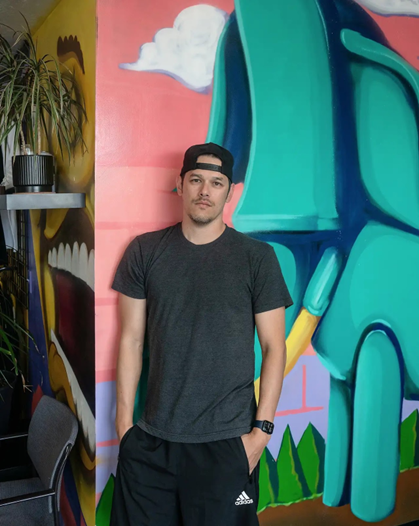
Josh Perkins is a celebrated Hip Hop dancer and a key figure in Salt Lake City’s b-boy scene. Known for his dynamic contributions to the B-Boy Federation and the wider urban arts community, Josh has spent more than two decades cultivating spaces for movement, creativity, and inclusion.
In 2012, Josh co-founded 1520 Arts, a nonprofit organization dedicated to growing the Hip Hop community in Utah. Through competitions, workshops, performances, and educational programming, 1520 Arts empowers local youth to develop their skills, find their voice, and connect with Hip Hop culture in meaningful ways.
Josh is also the creative force behind unforgettable events like the annual “Block Party”, a community celebration featuring local artists, food trucks, vendors, dance battles, and more. His innovative event planning and cultural leadership have earned him multiple Best of Utah awards — including Best Hip-Hop History Lesson (featured in Video 2) and Best Utah Dance Competitions.
“Josh is an amazing event coordinator. He’s helped grow the urban dance scene in our community and given numerous young dancers the opportunity to succeed.”
— Chris Owens, Creative Director
Josh didn’t set out to be a dancer. In high school, he was focused on soccer and played as the goalie on his team. But during the rollerblading boom of the 1990s, he was drawn to the skaters — many of whom were deeply rooted in the underground Hip Hop subculture. He soon traded in his goalie gloves for a pair of sneakers and stepped into the cypher.
More than 20 years later, Josh continues to evolve as an artist, teacher, and leader. He describes Hip Hop as a "versatile and infectious art form where movement becomes vocabulary." His mission is to make the culture accessible to everyone — celebrating people in their fullness, regardless of age, race, gender identity, or sexual orientation.
Josh’s story reminds us that Hip Hop is more than music or dance — it’s a language, a history, and a community where everyone can find a place.
Topics: Hip Hop History, Hip Hop Dance Lesson, Social Change
Class: English, Social Studies, Fine Arts, Library Media
Grades: 7-12 | Time: 2.5 Hours
Platform: Online Learning Management System (LMS) with synchronous learning option (e.g., Zoom, Google Classroom, Teams, Canvas) Or In-Classroom Learning
Quick Links
Watch Josh Perkins on YouTube
CURRICULUM MAP: Includes Core Standards and Learning Intentions
Part I | Meet Josh Perkins: Hip Hop Artist, Educator, and Community Leader
Part II | The History of Hip Hop
Part III | ‘Learn to Break’ Basics: From Toprock to Footwork and More
Inside the Unit
Video 1 introduces Josh as he shares his unconventional artistic journey and creative inspirations.
Video 2 explores the rich history of Hip Hop — from its roots in the Bronx during the 1970s to its rise as a global cultural force today.
Video 3 is a Hip Hop dance lesson where Josh teaches the foundational Hip Hop moves: Toprock, Footwork, Power Moves, and Freezes as well as some of the vocabulary and culture of Hip Hop.
Quotes to Use Throughout Curriculum:
“Those that are in love with the art and culture of hip-hop find themselves in a position of constant personal growth and the best way to achieve that is to look back and learn from those that came before you.” —Salt Lake SLUG reporter, Brittnie Gallegos
“It’s a versatile and infectious art form where movement becomes vocabulary.” —Josh Perkins
What’s included in the course?
-
Essential Questions
How did social, political, and economic conditions in the Bronx give rise to hip hop culture?
How do dance, DJing, MCing, and graffiti writing each contribute to the larger hip hop culture?
What challenges arise when historically marginalized cultures become mainstream or commercialized?
How does the local hip hop scene reflect or differ from the global hip hop movement?
How does physical movement communicate ideas and emotions in ways words cannot?
What can we learn about identity, community, and history through hip hop dance and performance?
Learning Intentions – Upon completing this Module, students will:
Describe the historical origins of hip hop, including the role of the Cross Bronx Expressway, DJ Kool Herc, and the sociopolitical context of the 1970s Bronx.
Cite textual evidence to support their analysis of informational texts and video content related to hip hop culture.
Identify and explain the four core elements of hip hop culture: DJing, MCing, breakdancing, and graffiti writing.
Evaluate how hip hop has been affected by globalization, commercialization, and mainstream media.
Reflect on how physical movement and other art forms communicate ideas and emotions in ways words cannot.
Analyze hip hop lyrics to identify social themes and express their understanding through evidence-based writing.
Demonstrate foundational hip hop dance moves: Toprock, Footwork, Power Moves, and Freezes.
Collaborate with peers to create and perform a short choreography
Success Criteria
I can explain the historical and cultural origins of hip hop and identify its four core elements (DJing, MCing, breakdancing, and graffiti).
I can create and perform a short hip hop dance routine with a variety of moves, showing understanding of their cultural significance and technique.
I can analyze and reflect on how hip hop has evolved globally and locally, including its impact—supported by evidence from research, class discussion, and written work.
Learning Outline
This 2.5-hour module is on the video presentation by Josh Perkins. It can be taught as a whole learning experience, or in chosen sections as time allows:
10 minutes: Launch Activity- While Viewing: Video 1–Meet Josh Perkins
10 minutes: Post-Viewing: Video 1– Creative Communication
15 minutes: Pre-Viewing: Video 2– Four Corners— Elements of Hip-Hop
25 minutes: While Viewing: Video 2– The History of Hip Hop
15 minutes: Post-Viewing: Video 2– Let’s Talk Hip Hop
45+ minutes: Demonstration– Hip Hop as Social Commentary
45 minutes: Making Connections– Arts Integration Project - Let’s Break!
-
Supplies for Viewing & Post-Viewing Activities:
Four Corners: Elements of Hip Hop Activity- Includes:
History of Hip Hop & Lyric Analysis graphic organizer (this document has 3 format options: pdf, Word, Google Doc)
Supplies for Demonstration Activity
History of Hip Hop & Lyric Analysis graphic organizer (this document has 3 format options: pdf, Word, Google Doc)
Song Lyrics:
Keep Ya Head Up by Tupac Shakur
The Message by Grandmaster Flash
Supplies for Art Integration Project
Video 3: ‘Learn to Break’ Basics: From Toprock to Footwork and More (23:06 min)
Space for students to dance in groups of 3-4
-
Launch Activity–While Viewing: Video 1: Meet Josh Perkins
[10 min]
Procedures:
Post-Viewing: Video 1: Creative Communication
[10 min]
[Learning Intention 5]
Procedures:
Tell Students: Video 1 ends with Josh saying, “The more creative you are as a dancer, the better you are.” He loves that as a hip hop dancer he can create something that no one has ever done, that is unique to him, and that people will recognize him by. He refers to his unique style and moves as a vocabulary through which he communicates.
Ask Students: When have you been your most creative? How were you recognized by it? How did you communicate to others through it?
Pre-Viewing: Video 2: Four Corners— Elements of Hip-Hop
[15 min]
[Learning Intention 3]
Procedures:
Access the Four Corners: Elements of Hip Hop Activity folder and print the four elements of hip-hop PDFs. Place one in each corner of the classroom.
(If online share a whiteboard with the four elements of hip hop written in each corner)
Using the Four Corners Activity Instructions, choose up to 15 prompts that you will read aloud to students.
Have students move to the corner they think matches the clue. Once there, have them explain their choice with peers. (If online, have students either annotate on the whiteboard or put their answer in the chat. Discuss answers as a class after each prompt.)
While Viewing: Video 2: The History of Hip Hop
[25 min]
[Learning Intentions 1,2,4]
Tell Students: We are about to watch Video 2 where Josh explains the history of hip hop and how the four elements came to be. I would like you to answer a few questions as you watch.
Pass out the History of Hip Hop & Lyric Analysis graphic organizer and have students read through the questions on page 1.
Play Video 2: The History of Hip Hop (14:56 min)
Post-Viewing: Video 2: Let’s Talk Hip Hop
[15 min]
[Learning Intentions 1,2,3,4]
Procedures:
As a class, discuss students’ responses to the History of Hip Hop questions.
In pairs, ask students to think back on the Four Corners: Elements of Hip Hop activity. Discuss which element students most connect with and why.
As a class, ask students what surprised, or interested them about hip hop’s beginnings?
Demonstration: Voices of the Movement— Hip Hop as Social Commentary
[45+ min]
[Learning Intentions]
Procedures:
Read aloud to students: Hip Hop has always been more than just music—it's been a powerful tool for social change. Since its beginnings in the Bronx during the 1970s, hip hop gave a voice to young people in marginalized communities who were often ignored by mainstream society. Through lyrics, dance, graffiti, and DJing, artists spoke out about poverty, racism, police violence, and inequality. Songs like “The Message” by Grandmaster Flash described the struggle in inner-city neighborhoods, while modern artists like Kendrick Lamar continue to address injustice and identity. As hip hop culture spread worldwide, it inspired movements for justice, inclusion, and empowerment across different races, genders, and generations.
Tell Students: We are going to dive deeper into how hip hop has been, and still is, a powerful tool for social change. To do this we are going to analyze the lyrics of a song using the History of Hip Hop & Lyric Analysis graphic organizer (pg. 2).
Have students read through the Lyric Analysis section.
Distribute the two song lyrics: Keep Ya Head Up(Tupac Shakur) and The Message (Grandmaster Flash) and have students choose one to analyze.
Option 1: Put students in groups and give each group a copy of both song lyrics.
Option 2: Students rotate between lyric stations and use the Lyric Analysis tool to answer the following:
What issue is the artist talking about?
What literary devices or imagery do they use?
How does this reflect the values or struggles in hip hop culture?
As a class, discuss how these songs align with the origin and purpose of hip hop.
Provide students with this writing prompt: “How has hip hop served as a tool for social change, both historically and today?” (this essay may be completed during class or independently)
Students should include the following in their essay:
One or more of the four elements (DJing, MCing, Dance, Graffiti)
Cultural influences (African American, Puerto Rican, queer, youth, etc.)
A reflection on commercialization, inclusion, or global impact
Encourage students to use the song analysis as evidence or inspiration in their essays.
-
Making Connections: Arts Integration Project – Let’s Dance!
[45 min]
[Learning Intentions 7,8]
Procedures:
Tell Students: We are now going to watch Video 3. In the first part of the video, Josh explains the four foundational Hip Hop dance moves:
Toprock
Footwork
Power Moves
Freezes
Let’s watch the intro as a class now. Play Video 3: ‘Learn to Break’ Basics: From Toprock to Footwork and More (23:06 min) (Stop the video at 5:04 min before the dance instruction starts.)
Tell Students: In the rest of the video, Josh teaches us how to do these four foundational dance moves. In groups of 3-4, you are going to learn these moves and choreograph a short sequence. Feel free to add elements of our local culture or personal identity into your movement piece!
Put students into small groups (3-4) and share Video 3 with each group to watch independently. Tell them to start the video at (5:05 min)
Invite groups to share their breakdance!
-
Invite students to “dig deeper” on these topics by providing additional options for research and reflection on Hip Hop’s history and contemporary culture and dance.
Classes & Workshops
1520 Arts- The focus of 1520 ARTS is to help grow the Hip Hop community in Utah while providing local youth with an opportunity to develop their skills. This is done through competitions, workshops, performances and education. The ultimate goal is to provide members of our community with a chance to learn, work and create while exposing our local Hip Hop community to people from all over the country.
Websites
Cornell Hip Hop Collection— Archival collection preserving artifacts, recordings, flyers, artwork, etc.
National Museum of African American History & Culture — Hip-Hop (R)Evolutions— Interactive timeline and history of hip hop’s roots and influence.
Kennedy Center – “Hip Hop: A Culture of Vision and Voice”— Educational resource exploring the elements (DJing, MCing, dance, graffiti) and voice of hip hop.
Carnegie Hall Timeline of Rap & Hip-Hop— Chronological history of rap/hip-hop, with contextual notes.
Raptology— Hip hop / rap news, interviews, artist features, critical articles.
HotNewHipHop (HNHH)— Daily hip hop / pop culture content: news, releases, culture, videos.
Articles and Essays
“Hip Hop: A Culture of Vision and Voice” — Kennedy Center, as noted above, includes essays and media. Kennedy Center
“Hip-Hop (R)Evolutions” interactive site by NMAAHC — explores historical phases, influences, and change over time. National Museum of African American History
“Understanding why the graphic novel, The Graphic History of Hip Hop, is a valuable Educational Resource” — talks about how visual storytelling enriches teaching hip hop history. Taji Mag
Article / contextual essays in the Carnegie Hall rap/hip hop timeline site — gives short historical “mini-essays” on key periods.
Videos & Documentaries (Vet videos for age appropriateness)
The Birth of Hip Hop — a short video exploring DJ Kool Herc’s early party in the Bronx.
The Hip Hop Years — full documentary covering multiple decades of hip hop.
Pioneers of Hip-Hop: Check the Technique — explores DJs and early culture around the formation of hip hop. YouTube
And You Don’t Stop: 30 Years of Hip Hop — multi-part documentary tracing hip hop’s journey from the 1970s to the 2000s.
Hip Hop Documentaries Playlist on YouTube — a curated list of many hip hop history docs. YouTube
10 Hip-Hop Documentaries You Need to Watch — article listing essential YouTube docs (Style Wars, etc.)