

The Weight We Carry: Art as Connection and HEALING | James rees | ARTrageous Online
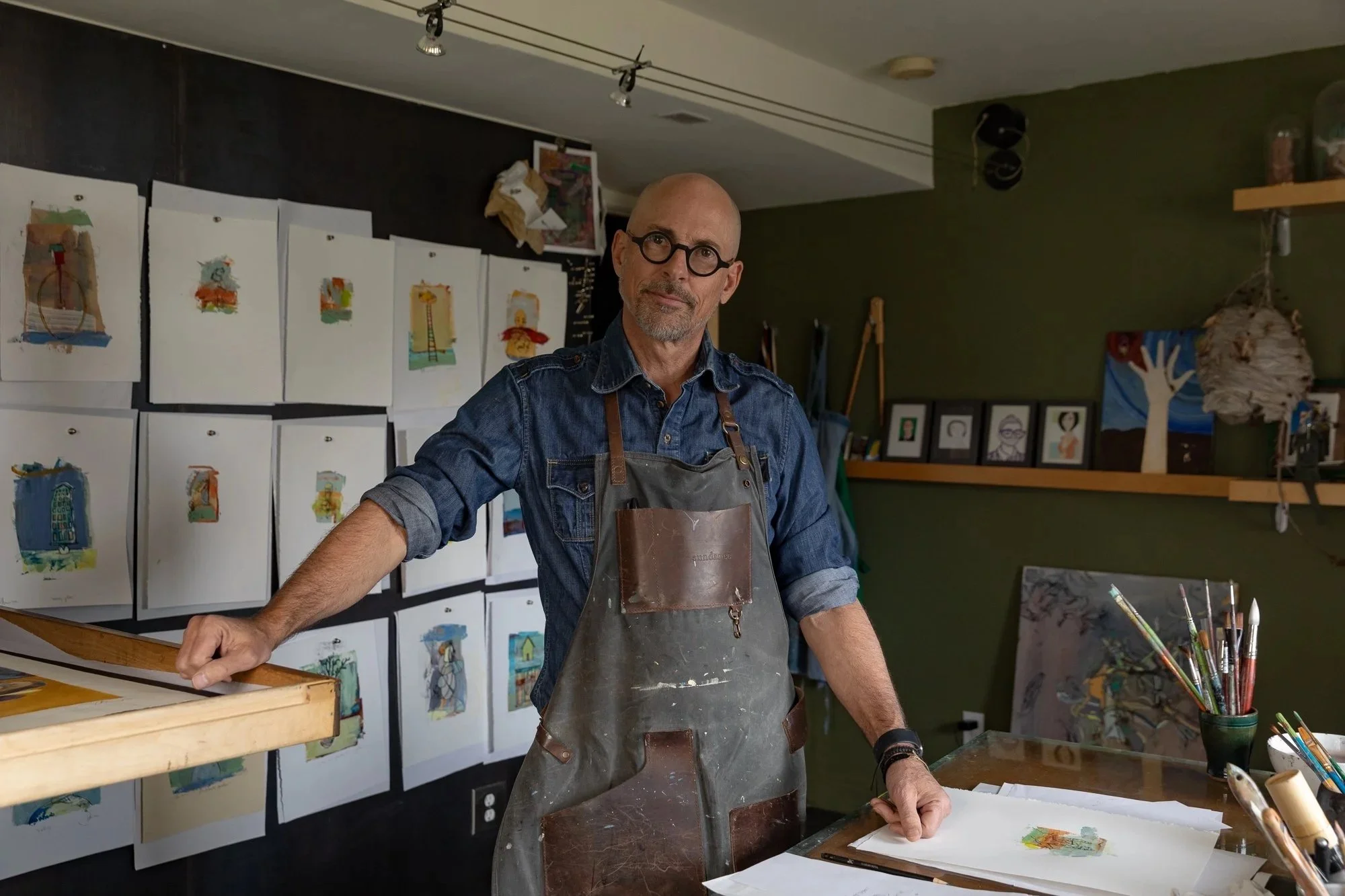
James Rees is a prolific Utah-based artist, researcher, and award-winning educator who has spent 30 years teaching at Provo High School. Though he initially resisted the idea of becoming a teacher, famously stating he’d "rather have a pencil stuck in his eye," he found his calling in guiding students to discover their own creative paths. Rees specializes in visual storytelling through monotype printmaking, using the medium’s unpredictability as a mirror for life’s challenges. His work explores themes of equilibrium, family struggles, and the "weights" we all carry, which not only transforms his feelings into ideas that bridge the gap between people, but also serve as inner healing. For Rees, art is a conversation with himself that he shares with others to foster authentic connection.
Topics: Visual Storytelling, Printmaking, Art as Healing, Visual Journaling, Identity
Class: English, Fine Arts, Library Media
Grades: 7-12 | Time: 4 Hours
Platform: In-Classroom or Online Learning Management System (LMS) with synchronous learning option (e.g., Zoom, Google Classroom)
Part I | Meet Sofia Gorder
Part II | The Science of Immersive Experiences and Breathing Ourselves Back to Health
Part III | We Got You: Tools for Sleep, Stress, Slouching, and Showing Up!
Inside the Unit
In this three-video series, we delve into the life and practice of artist and educator James Rees. In Video 1 we learn about the forces that shaped James Rees’ career and artistic identity. In Video 2, we will explore the personal meaning and recurring themes behind his monolithic prints. We conclude with a hands-on instructional video on visual journaling—a low-barrier creative practice that helps students "cancel the noise" of digital distractions, and conquer the fear of the blank page by treating art as a private, messy conversation with oneself.
Quotes to Use Throughout Curriculum:
“Art is a conversation with myself that I share with others.”
“The formal properties of your work reflect back how you’re feeling and thinking.”
“Meaning follows the mess.”
What’s included in the course?
-
Supplies for Pre-Viewing /Viewing/ Post-Viewing Activities:
Supplies for the Demonstration Activity:
How Can Art Help Your Teen’s Mental Health? By Villa Victoria Academy | Educational Insights
Blank piece of paper
Heavy pencil, crayon, or marker
Supplies for Art Integration Activity
Blank piece of paper (ideally a journal with blank pages)
Pencil and/or pen
-
Launch Activity–Pre-Viewing: Video 1: Meaningful Art
[15 min]
[Learning Intention 1]
Procedures:
Hook: Put students in pairs and ask them to talk about a piece of art they’ve created that is memorable to them—it could be a sketch, a painting, a craft, something digital, etc. Have them share why it stands out and what specific emotions come up when they look at it or think about making it.
Invite 2-3 volunteers to share their meaningful art creation and emotional connection to it with the class.
Tell Students: Notice how creating art naturally brings up strong feelings—when we watch the first video, pay attention to how James uses art to process and heal those emotions.
Tell Students: Before we watch the video, I am going to read you an introduction to James Rees. As you listen, I would like you to generate one question.
“James Rees is a prolific Utah-based artist, researcher, and award-winning educator who has spent 30 years teaching at Provo High School. Though he initially resisted the idea of becoming a teacher, famously stating he’d "rather have a pencil stuck in his eye," he found his calling in guiding students to discover their own creative paths. Rees specializes in visual storytelling through monotype printmaking, using the medium’s unpredictability as a mirror for life’s challenges. His work explores themes of equilibrium, family struggles, and the "weights" we all carry, which not only transforms his feelings into ideas that bridge the gap between people, but also serve as inner healing. For Rees, art is a conversation with himself that he shares with others to foster authentic connection. “
As a class, have a few students share their questions and discuss.
Possible Questions:
What is monotype printmaking? A Form of printmaking where an artist paints or draws on a smooth, non-absorbent plate (like glass, metal, or plexiglass) and transfers the wet image onto paper.
What is visual storytelling? The art of using images, vs text, to tell a story, spark emotion, convey an idea, and connect with people.
While Viewing: Video 1: Meet James Rees
[10 min]
[Learning Intentions 1,3]
Procedures:
Tell Students: Here is a question I’d like each of you to focus on while we watch Video 1. James explains that his process—monotype printmaking—is a tool for personal reflection and emotional processing. Pay close attention to this key idea: In what ways does James see the process of monotype printmaking mirroring life itself? Write down your thoughts as you listen. (Display question on board/chat)
Play Video 1: Meet James Rees (5:21 min) and tell students that after watching, we will discuss their answers to the question.
Post-Viewing: Video 1: Art Mirroring Life
[5 min]
[Learning Intentions 1,3]
Procedures:
Ask Students: How does James see printmaking as mirroring life?
Possible Answer: The inherent unpredictability of layering ink in printmaking mirrors the unexpected turns of life, teaching adaptability and offering profound personal healing.
Tell students: In the next video, you will learn more about what aspects of James’ life surface in his art and how his artwork is a tool for healing both inward, and outward, helping others.
Pre-Viewing: Video 2: Houses, Rocks, Ribcages: A Self Reflection
[15 min]
[Learning Intentions 2 ,4]
Procedures:
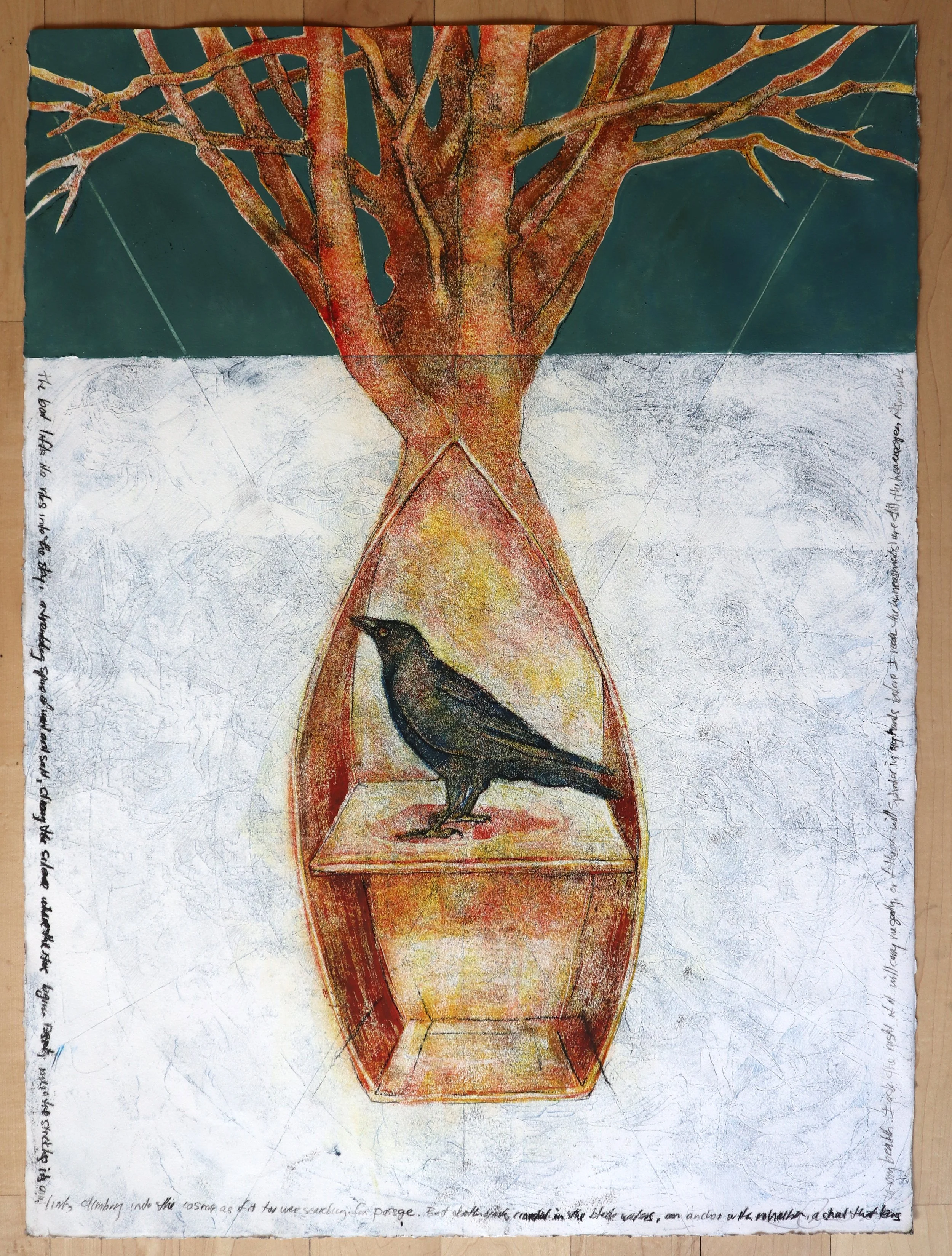
Show students the five paintings in the James Rees Art folder and as a class, analyze them:
What do they see?
What might it symbolize?
Tell Students: We are now going to watch Video 2 called Art as a Pathway to Connection and Healing to learn more about James Rees’ art.
While Viewing: Video 2: Art as a Pathway to Connection and Healing
[10 min]
[Learning Intentions 2,4]
Procedures:
Tell Students: In this next video, James explores art as a process of healing—both internally for ourselves and as a tool to help others heal. As you watch, take notes on two main ideas:
How James approaches this process.
Specific points James makes about art's power to heal.
Play Video 2: Art as a Pathway to Connection and Healing (6:49 min)
Post-Viewing: Video 2: The Rain Falls on the Just and the Unjust
[15 min]
[Learning Intentions 2,4,5]
Procedures:
Tell Students: Review your notes. Write a few paragraphs summarizing James’s key message about art and healing. Focus on his main arguments and any concrete examples he shared.
In pairs, each student reads their summaries on art and healing, noting any insights their partner captured that they missed.
Facilitate a brief class discussion to synthesize key takeaways.
Discussion Prompts:
What stood out to you most about how James uses art for internal healing versus helping others?
How did your partner’s key takeaways compare to yours?
Expand the discussion with the following:
Art as a Therapeutic Engine for Self-Discovery: Visual journaling and art-making serve as a reflective space to process complex emotions, family trauma, and internal struggles. The creative process helps James make sense of mental, emotional, and spiritual turbulence, leading to personal healing and resolution.
Fostering Connection, Vulnerability, and Mutual Support: Art-making breaks down isolation by creating an authentic space where personal vulnerabilities become universal touchpoints. Whether connecting with viewers, guiding aging adults, or mentoring students, sharing honest art builds empathy and reminds individuals that life’s hardships are best navigated together.
Show students the 5 art pieces in the James Rees Art folder again and have them elaborate on their original analysis of his work, discussing the themes James discussed in the video. Use the following to expand the discussion:
External Pressure and Emotional Load (House on Rocks, The Weight We Carry): Depicts precariously balanced homes under or alongside heavy rocks, symbolically capturing family stress and emotional burdens while using bright colors to convey resilience, optimism, and growth.
Internal Equilibrium and Spiritual-Physical Balance (Rib Cage Series, Figures with Rocks): Explores the tension between the physical body and spiritual self using rib cage imagery and personal figures to depict the continuous search for inner balance amid life's mental and spiritual weight.
Finding Beauty and Healing Within Debris (Mother/OCD Series): Reframes childhood chaos and hoard-filled debris by focusing on vibrant colors, notes, and patterns, enabling emotional closure and revealing the loving essence of a loved one beneath mental health struggles.
Interconnectedness and Shared Resilience (Houses Tied Together): Features multiple structures bound to one another on precarious points, illustrating that human connection and mutual dependence are essential to achieving stability during uncertain times.
Acceptance of Life’s Unpredictability (The Rain Falls on the Just and the Unjust): Examines the universal nature of hardship, emphasizing that adversity affects everyone and requires an adaptive, resilient response rather than isolation.
Tell Students: Before we watch video 3 on visual journaling, we are going to learn a little more on art and healing.
Demonstration: Read, Discuss, & Release!
[30 min]
[Learning Intentions 5,7]
Procedures:
Put students into groups of 2-3 and have them read the article: How Can Art Help Your Teen’s Mental Health? which focuses on the daily realities teens face.
Ask students to identify one sentence that explains why making art feels different than doing regular schoolwork. Have each pair share their sentence.
As a class, discuss how the article ties into what they have learned through James’ videos.
Possible Answers:
No "Right Answer": Unlike math or grammar, art has no single correct outcome, removing performance anxiety.
Cognitive Shift: Drawing shifts brain activity away from analytical overthinking into a calm, focused state.
Control & Agency: You control the marks, shapes, and space on your page, making it a safe place to process feelings non-verbally.
Read, Discuss, & Release: Tell Students: Use are going to do a two-step mini-lesson as a segue into the visual journaling activity we will do next.
Step 1: The “Pressure Points” Discussion- Ask Students:
The article mentions that in art, 'there isn't pressure to find one right answer.' Why is that idea intimidating to some people, but freeing for others?
Answer: Intimidating? People are often taught in school to look for the single correct answer. When there isn't one, they worry about making mistakes or not being "good" at art. Freeing? Art becomes a safe space to express feelings, explore ideas, and connect with yourself without any fear of failing or being judged.
James mentioned in the video that our minds criticize something before we've even made it. How does the article say art helps quiet that inner critic?
Answer: Art quiets the inner critic by shifting brain activity toward creative focus, eliminating the fear of being wrong, and replacing judgment with patience and self-expression
Step 2: The “Tension Line Release”- Tell Students- Before we explore doing a visual journal entry, let’s do a drawing exercise on a scrap piece of paper to help shift our brains into a visual mode.
Find the Tension: Ask students to think about one physical or emotional tension they are carrying right now (e.g., test stress, fatigue, feeling overwhelmed)
The Slow Drag: Tell them to press a heavy pencil, crayon, or marker onto their scrap paper. Have them drag the line continuously across the paper as slowly as possible, concentrating purely on the physical friction and weight of the tool.
The Speed Explosion: On the same paper, have them make fast, jagged, or looping scribbles around that original slow line for 10 seconds to "release" the mental chatter.
Tell Students: This was a small lesson to quiet your inner critic and overcome the blank page getting you ready for James's continuous-line doodling activity.
-
Making Connections: Arts Integration Project – A Quiet Space to Ideate
[50 min]
[Learning Intentions 5,6,7]
Procedures:
Tell Students: James distinguishes between a "sketchbook" (perfection) and a "visual journal" (process)
Tell Students: We are going to watch Video 3 called: Visual Journaling. I would like you to listen for:
How does a visual journal help teenagers "cancel the noise" of social media?
As a class, discuss how a visual journal helps teenagers “cancel the noise” of social media?
James’ Answer: He states that a visual journal helps counter this by acting as a dedicated, quiet space to explore your own thoughts without all that noise, allowing you to figure out what you are genuinely interested in. He frames the visual journal as a personal sanctuary—a portable tool where you can deactivate external distractions, meander, make messy mistakes, and process your internal life on your own terms.
Tell Students: We are going to apply James’ methods and create a visual journal entry that serves as a "quiet space" for your thoughts.
Tell students: You might remember that James describes the blank page as something that can be very intimidating for students because our minds race ahead and criticize something we haven't even made yet, which stops the creative process before it even begins.
To confront the "fear of the blank page," start by moving your pencil without a plan—just make a mark and let it evolve.
Use the "layering" technique. If you make a "mistake," do not rip the page out. Just like in life, you can't erase or tear out segments you don't like; you have to adjust, layer your experiences, and make it beautiful in the end.
Have students draw in their visual journals (20 min)
Put students in pairs and have them discuss
One way your journal entry helped you process a thought or feeling.
Any symbols or imagery that showed up in your journal
Open it up to a class discussion about students’ experiences with visual journaling
-
Invite students to “dig deeper” on these topics by providing additional options for research and reflection on finding voice, connection, and healing through art and creativity.
James Rees Art- Explore his "The Weight We Carry" portfolio
“Still Here: James Rees”- (15 Bytes) on creating during the pandemic
Art and Healing Activities For Youth
15 Powerful Art Therapy Activities for Kids, Teens, & Adults- Designed by Citizen Advocates, an ‘collective of innovative social care’ that focus on advancing the wellness of communities.
Expressive Art Workshops- Ideas for art and healing from a "Psychotherapist and Expressive Arts Educator” Shelley Klammer.
Brushing Away Stress- 21 art therapy activities for self-expression and healing.
Books
The Journal Junkies Workshop: Visual Ammunition for the Art Addict- Harness the artistic explosion ticking in your head, just looking for a creative way to detonate. Prepare to be bombarded with ideas, techniques and suggestions as you allow your creativity to take hold.
Other Websites
Behance Graphic Design and Job Opportunities- A place to showcase your work and find new inspiration.
Cutthroat: A Journal of Arts: Includes online issues, writing contests, and more. They are dedicated to providing a safe space for a diversity of writers.
Publications
”Ashleigh Allen: Why I Write”: I began writing poetry as a child because I felt alive differently when I wrote. The page offered me a place to create on my own inventive terms, at my own pace, and under my own evolving directions. As a teen…
Teen Ink- A publication written entirely by teens. The Art & Photo and Opinion/Lifestyle sections feature young artists showcasing their work alongside reflections on how mediums like painting, digital art, and photography help them process complex emotions, build confidence, and experiment with identity.
Scholastic Art and Writing Awards- Features award-winning work and artist statements from middle and high school students across the U.S. Teen creators detail how building visual portfolios, experimenting with sculpture, or designing fashion serves as a primary outlet for self-exploration and personal healing.